
Pool Leak Detection in Ann Arbor, MI
Finding where a pool is losing water, in the liner, the plumbing or the equipment, so the repair goes where the water is actually getting out.
How Do You Know If a Pool Is Leaking?
Every pool loses some water to evaporation, more on hot, windy days. A leak is water going somewhere else. A simple way to tell the difference is the bucket test: set a bucket of pool water on the top step, mark the water level inside the bucket and on the pool wall, and compare the two after a day. If the pool drops more than the bucket, something is leaking.
- Water level dropping faster than the bucket
- Wet or soft ground around the pool or the equipment
- Air in the pump or the pump losing prime
- Tears or loose spots in the liner
- Higher water bills from refilling
Where Do Pool Leaks Usually Hide?
Most leaks come from one of three places. Finding which one comes first, because the repair for each is different.
The liner
Tears, pinholes and the seals around the skimmer, returns, lights and steps.
The plumbing
Lines running underground between the pool and the equipment.
The equipment
Pump seals, filter housings, valves and the fittings between them.
Finding a Leak in a Vinyl Liner
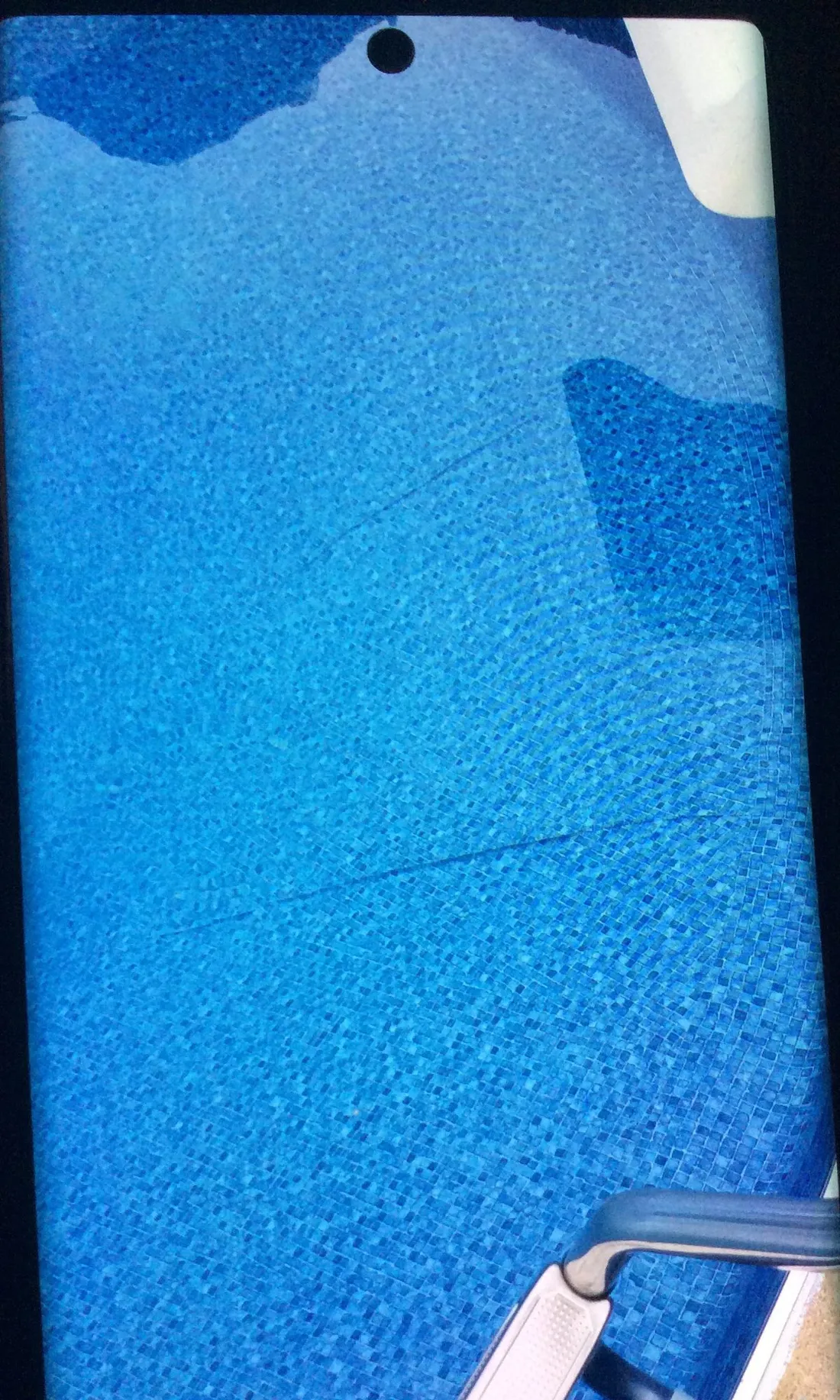
Liner leaks are often small and hard to see from the deck. They tend to show up at the fittings, along the steps and anywhere the vinyl has been stretched or scraped. We work around the pool wall and floor looking for the spot, the same kind of close look you see in the photo at the top of this page.
What Happens After the Leak Is Found?
Once we know where the water is going, the fix is clear. A small liner tear gets patched, a failing fitting or seal gets replaced, and a plumbing leak gets repaired at the line. If the liner is worn out all over, vinyl liner replacement is usually the better answer than chasing one leak after another.
Leak Detection FAQ
How much water loss is normal for a pool?
It depends on the weather, since sun and wind speed up evaporation. The bucket test above is the easiest way to see if your pool is losing more than that.
Can a leak be in the equipment instead of the pool?
Yes. Pump seals, filter housings and valves can all leak. If the equipment is the problem, see filter and pump installation.
Do you find leaks in gunite pools?
Yes. Leak detection covers vinyl and gunite pools. For bigger repairs on an older pool, see pool renovation.
Other Pool Services We Offer
What Customers Say About Perfect Pools
 Find Us on Google
Contact Us
Tell us about your pool and what it needs. Send the form and we will get back to you, or call if you would rather talk it through.
